
Vibe coding is the term coined by Andrej Karpathy in 2025 to describe a new way of programming: the engineer describes what they want in natural language, the AI writes the code, and the engineer tests, adjusts, and iterates by instruction—without needing to understand or edit line by line. By 2026, it became the dominant standard for prototypes, internal scripts, and MVPs—but it's a trap in production code without discipline. This pillar explains what vibe coding is, when it works, when it turns into technical debt, and how serious teams use AI in engineering without losing governance.
In February 2025, Andrej Karpathy—ex-OpenAI, ex-Tesla, one of the most respected voices in applied AI—posted a tweet that went viral:
"There's a new kind of coding I call 'vibe coding', where you fully give in to the vibes, embrace exponentials, and forget that the code even exists."
The phrase captured a moment. What started as a joke became a technical term in three months. Conferences, job openings, articles, books. Vibe coding entered the official vocabulary of software engineering in 2025-2026. To understand more about applying AI in corporate contexts, also see prompt engineering for businesses.
But the euphoria was accompanied by confusion. What exactly is vibe coding? When does it work? When does it destroy quality? The honest answers are only now emerging, after a year of real-world practice in real companies.
This pillar explains the concept, separates the hype from what works, showcases the consolidated stack, and addresses the most important question for serious technical teams: how to use AI in engineering without becoming a hostage to code that no one understands?
What is vibe coding, in an honest definition
Vibe coding is a programming style where the engineer:
- Describes the intent in natural language (conversational English or Portuguese)
- Lets the AI generate the code without editing line by line
- Tests the result by running or observing behavior
- Iterates with additional instructions ("now add X," "this broke, fix it," "refactor this better")
The critical point that differentiates vibe coding from "using AI for autocomplete" is the conscious relinquishment of line-by-line control. The engineer trusts the result if the behavior matches the intent—they don't review every generated token.
Karpathy describes this as "forgetting that the code exists." Productivity comes precisely from this: you operate at the level of intent and behavior, not syntax and structure.
The consequence is twofold. In the right cases, 10x productivity—a prototype that would take a day is done in hours, an MVP in a weekend. In the wrong cases, technical debt that no one can maintain, bugs no one understands, invisible vulnerabilities.
Why vibe coding emerged now (and not in 2023)
Three factors combined to make vibe coding viable in 2025-2026, but not before:
1. Models reached production-level code. Claude Sonnet 4.5/4.6, GPT-5, Gemini 2.5 Pro write code that compiles, runs, follows idiomatic patterns, and respects existing structures in most cases. In 2023, this was an exception.
2. Integrated tools in the editor. Cursor, Windsurf, Claude Code, Aider, GitHub Copilot Agent—IDEs with deep AI integration, capable of seeing the entire project, editing multiple files, running the terminal, reading logs. The experience of "talking to the code" became fluid.
3. Models with long context + mature tool use. 1M tokens in Claude Sonnet 4.6 + standardized MCP + robust function calling allow the agent to have a view of the entire codebase and the ability to execute tasks that previously required manual coordination.
Before these three happened together, vibe coding was a novelty. In 2026, it's a real workflow in serious teams—with important caveats that we will discuss.
Where vibe coding generates real value
Cases where vibe coding is already a productive standard in 2026:
Rapid prototyping. You want to test an idea. Instead of spending a day setting up boilerplate, you tell the agent the idea. In 30 minutes, you have a running prototype. You discard it if it doesn't work; you iterate if it does. The cost of exploration has dropped to zero.
Internal scripts and one-off tools. Data migration scripts, parsers, process automations. Code that will run once, won't go into production, doesn't need to be elegant. Vibe coding is perfect.
MVPs and demos. Applications to validate a hypothesis, not to scale. Show to investors, potential clients, internal teams. It works, demonstrates value, enables decisions. A "real" rewrite comes later, if validated.
Learning new technologies. Want to understand how Next.js 15, Server Components, or a new library works? Vibe coding with an agent that knows the tech accelerates learning—you see working code, ask why, modify, see the result.
Bug hunting and debugging. An agent with access to the codebase + logs + the ability to test hypotheses is a debugger on another level. It identifies patterns that humans take longer to see.
Code review and refactoring. Asking the agent to analyze a snippet, suggest improvements, apply proposed refactoring. Excellent for quality, especially in legacy code.
In all these cases, the common characteristic is: the cost of error is low, the value of speed is high.
Where vibe coding becomes a trap
Cases where undisciplined vibe coding destroys operations:
Production code without review. Deploying code to production that no one truly understood. When bugs appear (and they do), no one knows how to debug. When incidents happen, no one knows how to respond. Invisible technical debt until a crisis.
Systems with security requirements. SQL injection, authentication, authorization, crypto. Agents generate code that "looks right" but has subtle flaws. Without serious security review, it becomes a real vulnerability.
Critical performance. Query optimization, hot paths, logic that scales to millions. AI generates functional code, but rarely the most efficient. Without benchmarking and review, performance degrades.
Code that others will maintain. Large teams, shared codebase, multiple engineers editing. Without standards and discipline, vibe coding turns into a Tower of Babel—each part of the code follows a different style, no one understands the other side.
Architectural decisions. Framework choice, design patterns, database structure. Decisions that carry long-term consequences. AI can suggest, but the decision must be human—vibe coding is a tactical horizon, not a strategic one.
The heuristic that separates: vibe coding works when the code is disposable or has a low error cost. It becomes a trap when the code needs to last and the error cost is high.
The professional vibe coding workflow in 2026
Serious teams don't choose between "vibe coding" and "traditional engineering." They combine the two. The consolidated workflow in mature teams:
1. Clear specification before generation
Before asking the agent, write a short specification:
- What the code needs to do (behavior)
- What it CANNOT do (constraints)
- How you will validate (tests, expected behavior)
- Where it fits into the larger system
This 5-minute step determines whether vibe coding will generate value or debt.
2. Generation with codebase context
An agent that sees the entire project performs drastically better than an isolated agent. Cursor, Claude Code, Windsurf—all handle this well in 2026. Do not use AI for project code without giving it a view of the project.
3. Validation by behavior, not by reading
The central idea of vibe coding: you don't review line by line. You run, observe, test. But test thoroughly—not just "opened without error." Use cases, edge cases, automated tests.
4. Code review with a production eye (when applicable)
For code that needs to last, someone needs to truly understand what was generated. Not necessarily the person who generated it—it could be a pair review, or a senior architect. But it cannot be "no one."
5. Refactor to team standards (when applicable)
AI code tends to follow average internet patterns. Teams with their own conventions (style, structure, naming) need to adjust. A well-instructed agent does this in the first generation; without instruction, refactoring is necessary.
6. Automated tests and evals
For any code that needs to last, automated tests are mandatory. AI generates tests quickly; use this. Vibe coding without tests in production is faith, not engineering.
7. Documentation by intent
AI can generate code that no one understands. Documentation explaining the intent (not the syntax) preserves knowledge. "Why this approach?", "What alternatives were discarded?", "What assumptions are embedded?"—these questions only humans can answer.
Consolidated vibe coding stack in 2026
Tools that have dominated the category:
| Tool | Specialty | When it shines |
|---|---|---|
| Cursor | Deep AI IDE | Complete coding workflow, multi-file edits, great for projects |
| Claude Code | Terminal-first, Anthropic | Complex tasks, autonomous agents, large codebase manipulation |
| Windsurf | IDE with Cascade agent | Direct competitor to Cursor, strong in refactoring |
| GitHub Copilot Agent | IDE-agnostic, GitHub-native | Teams already in the GitHub ecosystem, automatic PRs |
| Aider | CLI, open-source | Engineers who prefer terminal, custom models |
| Replit Agent | All-in-one platform | Prototype + deploy in one place, non-engineers |
| v0 by Vercel | UI generation | Fast frontend with React/shadcn components |
| Bolt.new | Full-stack apps | Complete MVP in a single conversation |
The choice between them depends on the stack and preference. Cursor leads in enterprise adoption. Claude Code won over experienced engineers who prefer the terminal. v0 dominated UI generation. Each has its niche.
How Draivv Rank uses vibe coding internally
The engineering team at Draivv Rank—Draivv's platform operated by Draivv—uses vibe coding as a daily practice, with discipline. A concrete example of the division:
- Free vibe coding: internal telemetry analysis scripts, one-off data migration tools, exploration of new features, prototypes that still need validation
- Vibe coding with mandatory review: new product features, integrations with third-party APIs (DataForSEO, GSC, WordPress), publicly exposed endpoints
- Traditional engineering + AI as a copilot: critical business logic (pricing, billing, authentication), editorial agent pipeline (which operates in production), database schema
The division is not arbitrary—it results from the principle: the higher the cost of error and the more durable the code, the less vibe and more engineering.
For a detailed look at the complete technical architecture, see How we built Draivv Rank: the AI stack behind automated SEO + GEO.
Common mistakes that destroy vibe coding ROI
Five patterns that appear in almost every beginner team:
1. Confusing speed with productivity. Generating 1,000 lines in an hour is not productivity—it's generation speed. Productivity is "code that works, lasts, is maintained." If no one understands what was generated, speed turns into debt.
2. Not testing behavior, only compilation. "Deployed without error" is not validation. Correct behavior, edge cases, performance—that's validation. AI generates code that compiles easily; it generates correct code less easily.
3. Skipping code review for production code. The temptation is great when the agent generates well. But review is what separates tactical vibe coding from strategic technical debt. Without it, production code becomes a black box.
4. Ignoring security. SQL queries with direct input, weak validation, secrets in code, poorly implemented authentication. AI reproduces internet patterns—including bad ones. Specific security review is mandatory for any public endpoint.
5. Not documenting intent. Code generated without "why" documentation becomes unintelligible in three months. The original author forgets. The team has no way to reconstruct it. Comments about intent are worth more than comments about syntax.
The evolution: from vibe coding to AI-assisted engineering
The honest prediction for the next 18-24 months is not "vibe coding dominates everything." It's fine differentiation between what makes sense with free AI vs. supervised AI:
- Exploratory tasks remain the domain of free vibe coding—rapid exploration, easy discarding, low error cost
- Production tasks evolve into "AI-assisted engineering"—AI as a tool, but traditional engineering as a discipline
- Architectural decisions remain human—AI accelerates analysis, humans decide
The dominant professional profile in 2027 is neither "vibe coder" nor "traditional engineer." It is an engineer who knows when to use each approach and calibrates the tool to the context.
For teams that want to prepare, three obvious investments: (1) master at least one AI tool deeply, (2) maintain discipline in evals and testing, (3) preserve the ability to review and understand non-trivial code—without this, AI-assisted becomes AI-dependent, and dependence without understanding is fragility.
Frequently Asked Questions about Vibe Coding
Will vibe coding replace programmers?
No—it will change how programmers work. The concrete prediction is that individual productivity will increase 2-5x for tasks suitable for vibe coding, but new skills will emerge: clear specification, behavior-based validation, governance of generated code, security in AI code. Programmers who don't evolve will fall behind; programmers who adapt will become more productive, not less in demand.
Is it safe to use AI-generated code in production?
It depends on discipline. AI-generated code without review, without tests, without security auditing is not safe—regardless of how "clean" it looks. AI-generated code with human review, automated tests, code review, and security auditing can be as safe as traditional code. AI doesn't change the principles; it changes the speed of generation.
What's the difference between vibe coding and using Copilot?
Traditional Copilot suggests completing lines as you type. Vibe coding reverses the game: you describe what you want in natural language, AI writes the complete block, you validate by behavior. Copilot is an assistant; vibe coding is delegation. The "Copilot Agent" version launched by GitHub approaches vibe coding.
Does vibe coding work on large/legacy codebases?
It works better now than in 2024, thanks to long context + agents that see the entire project. But it has limits: extensive refactorings that change architecture, debugging distributed problems, changes that affect contracts between modules—these cases still require a human engineer to lead. AI executes parts; humans coordinate strategy.
Do I need special equipment or an expensive license?
No. A minimal vibe coding stack fits within US$ 20-40/month: Cursor or Claude Code (US$ 20/month), basic API credits. For enterprise teams, costs increase with volume—but it remains accessible. Hardware: any reasonable development machine (16GB RAM, SSD) is sufficient.
Does vibe coding violate contracts with clients who require human review?
It can violate them, yes. Many B2B contracts (especially legal, healthcare, finance) require code to be written or reviewed by a human. Serious teams need to read contracts before using AI. The best practice: treat AI code like junior code—always passes through a senior before deployment in sensitive projects.
How do I prevent vibe coding from creating technical debt?
Five practices: (1) write a specification before generating; (2) review code before merging; (3) write tests (use AI for this too); (4) document intent, not syntax; (5) standardize style with a linter + formatter. Without these practices, any code—human or AI—becomes debt.
Does vibe coding change how I interview candidates?
Yes, it is changing. Leading companies in 2026 test: the ability to specify well before coding, the ability to critically review AI-generated code, the ability to debug behavior without reading line by line, knowledge of fundamentals (without which debugging becomes impossible). Pure LeetCode has become less relevant; reasoning about systems and validation has become more so.
Is vibe coding only for frontend or does it work for backend?
It works for both, with nuances. Frontend has a shorter cycle (changed, saw, validated)—vibe coding excels. Backend has a longer cycle (changed, deployed, tested, observed)—vibe coding helps but requires more testing discipline. Areas with strong performance or security requirements (database, authentication, infrastructure) need traditional engineering reinforced with AI, not pure vibe coding.
Conclusion: vibe coding is a tool, not a philosophy
The honest assessment of vibe coding in 2026: it is a powerful tool for a specific set of problems, not the definitive way to program forever. Teams that treat it as a tool—using it where it generates value, avoiding it where it creates debt—gain real productivity. Teams that treat it as a sole philosophy will pay dearly in the next 24 months.
The operational question for any technical team in 2026 is: which tasks in our workflow are natural candidates for vibe coding, and which require traditional engineering discipline reinforced with AI?
A clear answer separates teams that scale from teams that will refactor everything in 2027.
Draivv develops and operates Draivv Rank—Draivv's automated SEO and GEO platform for B2B. Our internal engineering uses vibe coding with discipline—free exploratory code, reviewed production code. In Brazil, the engine is operated by Draivv as a managed service. Learn more about Draivv.
Related Content
- Context Engineering: the discipline that replaces prompt engineering in 2026 — the technical foundation supporting coding agents
- AI Evals: how to evaluate AI performance in production — without evals, vibe coding in production is faith
- Multi-Agent Systems: when to combine AI agents — where coding agents become systems
- AI Agents: what they are, how they work, and how to apply them — agent fundamentals
- Claude vs ChatGPT in 2026 — model choice for coding
- Build vs Buy in AI — when it's worth vibe coding an entire product vs buying
- Custom Software in the AI Era — where vibe coding changes the economics of custom software
- How we built Draivv Rank — an example of a team using AI in engineering with discipline
Next Step with Draivv
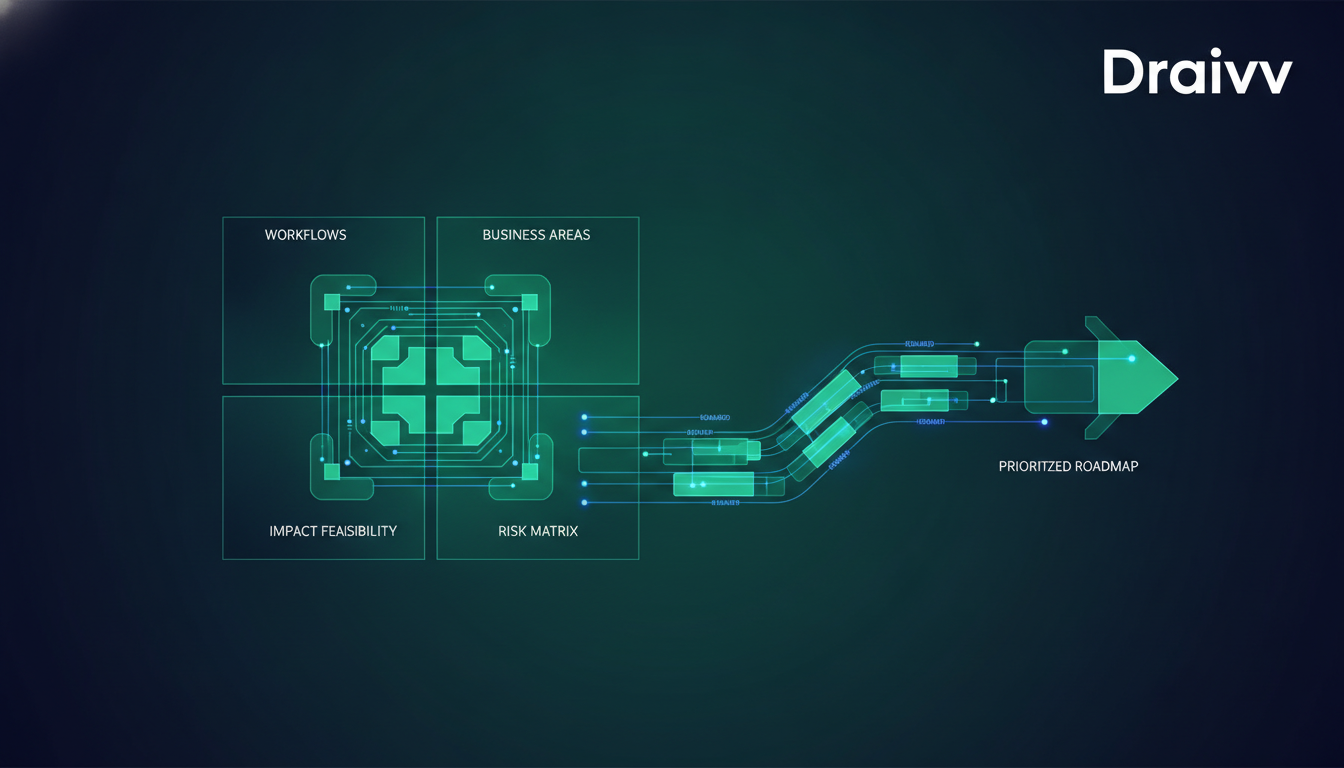
Applying AI with results begins with choosing the right problem, data viability, and a clear business metric. Discover our AI for Business Diagnostic to transform scattered opportunities into a prioritized application roadmap.
Get the next articles by email
New content from Draivv, straight to your inbox. No spam.